

The Role of Thermoplastic Preheaters in Road Marking
Road marking plays a critical role in traffic management, ensuring safety, efficiency, and clear guidance for drivers and pedestrians. Among the many technologies involved in road marking systems, thermoplastic preheaters are one of the most essential pieces of equipment. They directly influence the quality, durability, and performance of thermoplastic road markings.
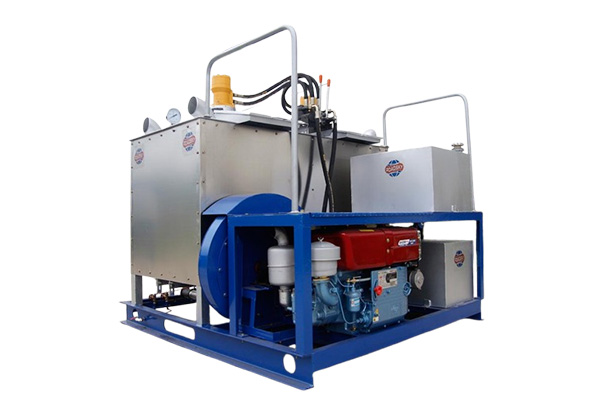
What is a Thermoplastic Preheater?
A thermoplastic preheater is a specialized machine used to heat solid thermoplastic road marking materials into a molten, homogeneous state before application on road surfaces.
Thermoplastic marking paint typically comes in granular or block form. Before it can be applied, it must be heated to a high temperature (usually between 180°C and 220°C) to achieve the correct viscosity and flow characteristics. The preheater ensures this process is efficient, consistent, and safe.
How Thermoplastic Preheaters Work
The working process of a thermoplastic preheater generally involves the following steps:
- Loading raw material: Thermoplastic materials are loaded into the heating tank.
- Heating process: The machine uses diesel burners, gas burners to heat the material gradually.
- Continuous stirring: A built-in agitation system ensures even heating and prevents material from burning or sticking.
- Temperature control: Advanced preheaters come with automatic temperature control systems to maintain consistent heat levels.
- Ready-to-use output: Once fully melted and mixed, the thermoplastic paint is transferred to the road marking machine for application.
Why Thermoplastic Preheaters Are Important in Road Marking
1. Ensures Material Quality and Consistency
Uneven heating can cause degradation of thermoplastic materials, leading to poor adhesion and reduced reflectivity. A high-quality preheater ensures:
- Smooth consistency
- Uniform texture
- Stable performance during application
2. Improves Road Marking Durability
Properly heated thermoplastic materials bond more effectively to asphalt and concrete surfaces. This results in:
- Longer-lasting road markings
- Resistance to wear from traffic
- Better performance in harsh weather conditions
3. Enhances Safety and Visibility
Road markings must remain visible at night and during bad weather. Proper heating ensures that glass beads embedded in thermoplastic materials adhere correctly, improving:
- Nighttime reflectivity
- Wet-weather visibility
- Overall road safety
4. Increases Construction Efficiency
Using a thermoplastic preheater significantly speeds up road marking operations. Contractors benefit from:
- Continuous material supply
- Reduced downtime
- Faster project completion
5. Reduces Material Waste
Improper heating can cause material burning or solidification, leading to waste. A well-controlled preheater minimizes:
- Material loss
- Reprocessing costs
- Operational inefficiency
Common Problems Without Proper Preheating
If thermoplastic materials are not properly preheated, several issues may arise:
- Cracking or peeling of markings
- Poor adhesion to road surface
- Uneven thickness of application
- Reduced reflectivity at night
- Shortened service life
These problems often lead to increased maintenance costs and potential safety risks.
Choosing the Right Thermoplastic Preheater
When selecting a thermoplastic preheater, contractors should consider:
- Tank capacity
- Heating speed
- Fuel type
- Mixing performance
- Temperature control accuracy
- Ease of cleaning and maintenance
- Mobility and transport requirements
Small projects may only require a compact preheater, while highway and municipal projects often need larger double-cylinder or high-capacity models.
Maintenance Tips for Thermoplastic Preheaters
Regular maintenance helps extend equipment life and maintain marking quality. Operators should:
- Clean the tank after use
- Check burners, valves, and fuel lines regularly
- Inspect the agitator and mixing system
- Monitor temperature sensors
- Avoid overheating material
- Remove residue before it hardens
- Follow the manufacturer’s operating instructions
Good maintenance reduces breakdowns and keeps road marking projects running smoothly.
Conclusion
The thermoplastic preheater is an essential component in modern road marking systems. It ensures that thermoplastic materials are properly melted, mixed, and maintained at the right temperature for application. This directly impacts the durability, visibility, and safety of road markings.