

Road Marking Machine: Everything You Need to Know
Road markings are essential for guiding traffic, separating lanes, identifying pedestrian areas, and improving overall road safety. To apply these markings efficiently and accurately, contractors rely on specialized road marking machines.
From small parking lot projects to highway construction, different road marking machines are designed for different paints, application methods, and working conditions. Understanding these differences can help contractors select the right equipment and improve both marking quality and productivity.
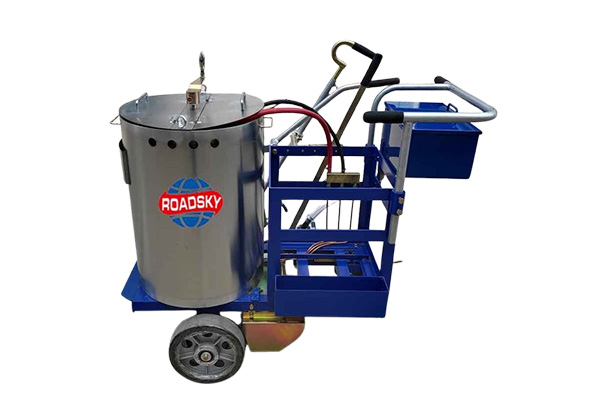
What is a Road Marking Machine?
A road marking machine is specialized equipment used to apply lines, symbols, arrows, pedestrian crossings, and other traffic markings onto road surfaces.
These machines can be used on:
- Highways
- Urban roads
- Parking lots
- Airports
- Industrial areas
- Bicycle lanes
- School zones
- Bridges
- Warehouses
Depending on the machine design, road markings can be applied using thermoplastic material, cold paint, two-component paint, or other specialized marking materials.
Compared with manual application, road marking machines provide more consistent line width, thickness, and paint distribution while significantly improving working efficiency.
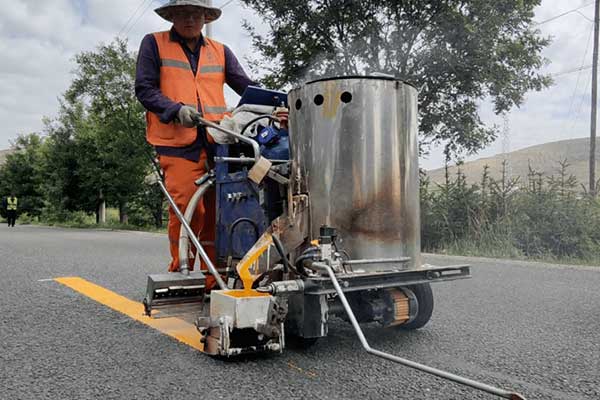
Main Types of Road Marking Machines
Road marking machines can generally be classified according to the type of marking material and application technology they use.
1. Thermoplastic Road Marking Machines
Thermoplastic road marking machines are widely used for highways, urban roads, intersections, and other areas requiring durable markings.
Thermoplastic material is heated until it becomes fluid and is then applied to the pavement. After cooling, it forms a hard and highly visible marking layer.
Common thermoplastic application methods include:
- Screed application
- Extrusion application
- Spray application
Thermoplastic markings usually provide good wear resistance and are suitable for roads with relatively heavy traffic.
Glass beads can also be applied onto the hot marking surface to improve nighttime retroreflectivity.
2. Cold Paint Road Marking Machines
Cold paint road marking machines use liquid traffic paint that can normally be applied without heating.
Depending on the machine, paint may be sprayed using airless or conventional spray technology.
These machines are commonly used for:
- Parking lots
- Urban streets
- Factory roads
- Temporary traffic markings
- Road maintenance projects
Cold paint machines are generally easier to operate and prepare than thermoplastic systems, making them suitable for many small and medium-sized marking projects.
3. Two-Component Road Marking Machines
Two-component road marking machines apply materials consisting of a resin and hardener that react chemically after mixing.
The resulting marking can provide strong adhesion, good durability, and resistance to wear.
Two-component systems are often selected for locations exposed to demanding traffic conditions, such as intersections, highways, and high-traffic urban roads.
4. Airless Road Marking Machines
Airless marking machines use high-pressure pumps to atomize paint without compressed air.
This technology can produce uniform paint coverage while maintaining relatively high working efficiency.
Airless marking machines are commonly used for cold paint applications and can be suitable for both road construction and maintenance work.
Walk-Behind vs. Ride-On Road Marking Machines
Another important way to classify road marking equipment is by how the machine is operated.
Walk-Behind Road Marking Machines
Walk-behind machines are pushed or guided by an operator.
Their main advantages include:
- Simple operation
- Good maneuverability
- Lower equipment cost
- Easy transportation
- Suitable for smaller projects
They are commonly used for parking lots, local roads, warehouses, factories, and maintenance applications.
Ride-On Road Marking Machines
Ride-on road marking machines allow the operator to drive the equipment while applying markings.
They are designed for higher productivity and are particularly useful for long, continuous marking operations.
Typical applications include:
- Highways
- Airport runways
- Large municipal roads
- Large parking facilities
- Long-distance road maintenance
For contractors handling large-scale projects, ride-on road marking machines can significantly improve marking speed and reduce operator fatigue.
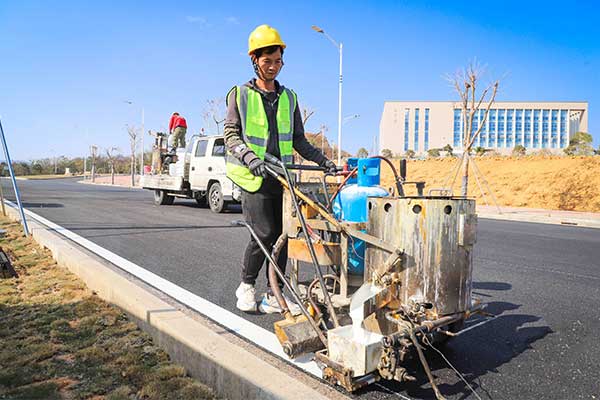
How Does a Road Marking Machine Work?
The exact working process depends on the type of machine.
For a typical paint spraying machine, the process includes:
- Paint is placed in the material tank.
- A pump pressurizes and transfers the paint.
- The spray gun applies paint onto the pavement.
- The operator controls line width and direction.
- Glass beads may be sprayed simultaneously for improved reflectivity.
Thermoplastic machines work differently because the marking material must first be heated.
Thermoplastic material is usually melted inside a thermoplastic preheater before being transferred to the road marking machine. The heated material is then applied through a screed box, extrusion system, or spray system.
Proper temperature control is especially important because it affects material flow, adhesion, and final marking quality.
Applications of Road Marking Machines
Road marking machines are widely used for applying traffic lines, symbols, and safety markings on different surfaces. Common applications include:
- Highways: Lane lines, edge lines, arrows, and other traffic markings.
- Urban Roads: Crosswalks, stop lines, bicycle lanes, and intersection markings.
- Parking Lots: Parking spaces, directional arrows, and safety zones.
- Airports: Runway, taxiway, and apron markings.
- Factories and Warehouses: Traffic lanes, pedestrian paths, and designated work areas.
Depending on durability and application requirements, different projects may require different road marking machines.
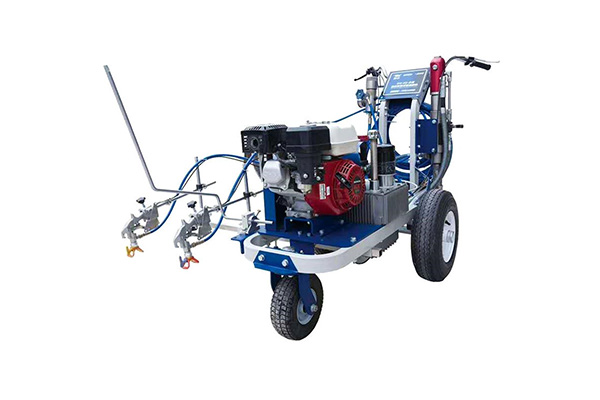
How to Choose a Road Marking Machine
Choosing the right road marking machine depends on the marking material, project size, and required working efficiency.
Consider these key factors:
- Marking Material: Choose a machine suitable for thermoplastic, cold paint, or two-component paint.
- Project Size: Walk-behind machines are suitable for smaller jobs, while ride-on machines are better for large road projects.
- Line Width: Make sure the machine can produce the required marking width.
- Working Efficiency: Check the spraying capacity, material tank size, and operating speed.
- Glass Bead System: Choose a machine with a bead dispenser if reflective markings are required.
- Maintenance: Consider spare parts availability and ease of maintenance.
Selecting a machine that matches your actual application can improve marking quality and reduce operating costs.
Road Marking Machine Accessories
Different accessories can expand the capabilities of road marking equipment.
Common accessories include:
- Glass bead dispensers
- Additional spray guns
- Line guidance systems
- Marking shoes
- Spray nozzles
- Hydraulic systems
- Automatic line controllers
- Ride-on attachments
- Thermoplastic preheaters
Some advanced machines also use electronic control systems to improve line consistency and automate intermittent marking patterns.
Tips for Better Road Marking Results
Even a high-quality machine requires correct operation.
Before marking, make sure the road surface is clean and dry. Dust, oil, moisture, or loose particles can reduce adhesion.
Operators should also check:
- Material temperature
- Spray pressure
- Nozzle condition
- Line width
- Material thickness
- Glass bead distribution
Testing the machine on a small section before beginning full-scale work can help identify incorrect settings.
Regular cleaning is particularly important for spray machines because dried paint can block filters, hoses, and spray tips.
Road Marking Machine Maintenance
Routine maintenance improves reliability and extends equipment service life.
After operation, operators should clean all components that come into contact with paint or thermoplastic material.
Other regular maintenance tasks include:
- Checking engine oil
- Inspecting hydraulic components
- Cleaning spray filters
- Checking nozzles for wear
- Inspecting hoses for leaks
- Lubricating moving parts
- Checking heating systems
- Tightening loose connections
Maintenance requirements vary between machine models, so operators should always follow the manufacturer’s recommended service procedures.
Conclusion
Road marking machines are essential equipment for creating safe, accurate, and durable traffic markings. From compact cold paint sprayers for parking lots to thermoplastic and ride-on machines designed for highway construction, there are many configurations available for different applications.
If you are looking for a reliable road marking machine for your project, Roadsky offers a range of thermoplastic, cold paint, and other road marking equipment for different application needs. Contact Roadsky for machine recommendations, technical support, and a quotation based on your project requirements.