

Glass Bead Depth Impact on Road Marking Retroreflectivity
Road marking retroreflectivity is a key factor in nighttime road safety. It determines how effectively pavement markings reflect vehicle headlights back toward drivers, helping them identify lane lines, edge lines, arrows, and other road markings in low-light conditions.
One of the most important factors affecting retroreflectivity is glass bead embedment depth. When glass beads are applied to road marking paint, their position relative to the marking surface directly affects how efficiently they receive and return light.
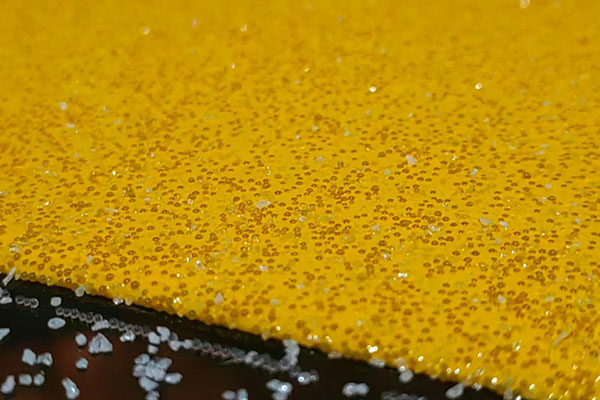
Glass Bead Embedment Depth Explained
Glass bead embedment depth refers to how deeply a glass bead is embedded into the road marking material.
When applied correctly, approximately part of the bead remains exposed above the marking surface. This exposed portion allows incoming light from vehicle headlights to enter the glass bead, undergo refraction and reflection, and return toward the driver’s eyes.
If the beads are embedded too deeply or are not embedded deeply enough, their optical performance can be reduced.
How Glass Bead Depth Affects Retroreflectivity
The relationship between glass bead depth and retroreflectivity is not simply linear. There is an optimal embedment range in which the beads provide the best optical performance.
1. Beads Embedded Too Deeply
When glass beads are embedded too deeply in the road marking material, too little of the bead remains exposed.
As a result:
- Less light can enter the glass bead effectively.
- The optical geometry of the bead is reduced.
- Retroreflective performance decreases.
- Nighttime visibility of the road marking may be reduced.
Deeply embedded beads can therefore result in lower initial retroreflectivity even when the marking contains a sufficient quantity of glass beads.
2. Beads Embedded Too Shallowly
If glass beads sit too high on the surface, they may not be adequately supported by the marking material.
This can lead to:
- Poor bead retention
- Increased bead loss from traffic
- Reduced durability
- Faster deterioration of retroreflectivity
Therefore, simply exposing more of the glass bead does not necessarily produce better long-term performance.
3. Optimal Embedment Depth
The best results are generally achieved when glass beads are embedded to an appropriate depth, leaving enough of the bead exposed for efficient optical performance while maintaining sufficient adhesion to the marking material.
The optimal depth depends on several factors, including:
- Glass bead diameter
- Road marking material
- Bead refractive index
- Application method
- Paint or thermoplastic thickness
- Road and traffic conditions
- Surface texture
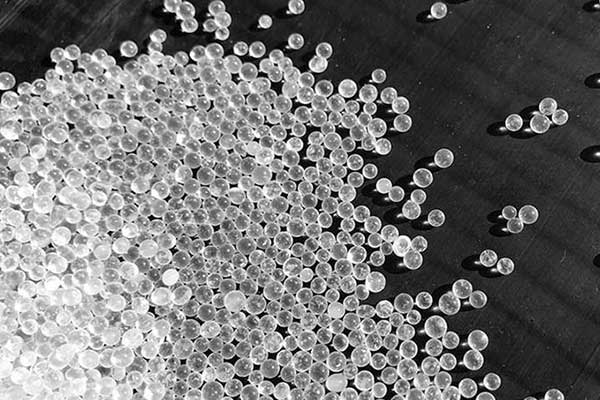
Why Glass Bead Size Matters
Glass bead diameter and embedment depth should be considered together.
For example, larger glass beads require an appropriate marking thickness and embedment depth to achieve the desired exposed surface. If the marking material is too thick or the beads are pressed too deeply into the material, the exposed optical surface may be insufficient.
Smaller beads have different optical and application characteristics and may require different application parameters.
Therefore, selecting the correct glass bead size and embedment depth is essential for achieving consistent road marking retroreflectivity.
The Role of Road Marking Material
Different road marking materials can affect glass bead embedment.
Common materials include:
- Solvent-based paint
- Water-based paint
- Hot-melt thermoplastic
- Cold plastic
- Two-component road marking materials
Material viscosity, curing characteristics, application thickness, and surface properties can all influence how deeply glass beads become embedded.
For this reason, glass bead application should be matched to the specific road marking material and installation process.
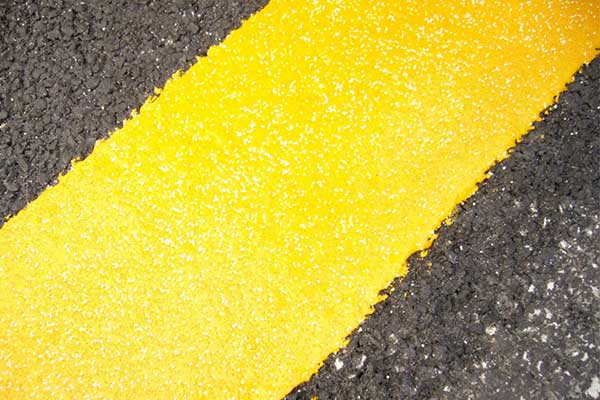
How to Control Glass Bead Embedment Depth
Contractors can control bead embedment through several application parameters.
1. Marking Thickness
The thickness of the road marking material directly affects how deeply beads can penetrate. Excessively thick or thin markings can make it difficult to achieve consistent bead positioning.
2. Drop-On Glass Bead Application
Glass beads are commonly distributed onto freshly applied road marking material. The timing and application rate can affect how deeply the beads become embedded.
3. Application Equipment
The design and adjustment of bead dispensers can influence bead distribution and penetration. Proper equipment calibration helps maintain consistent application across the entire marking.
4. Material Temperature and Viscosity
For thermoplastic markings, material temperature and viscosity can have a significant effect on bead embedment. Changes in these parameters may alter how quickly beads penetrate the marking surface.
4. Measuring Retroreflectivity
Retroreflectivity is commonly evaluated using a retroreflectometer. The measurement provides an indication of how much light is returned toward the observation direction.
A road marking with properly positioned glass beads can produce significantly better nighttime visibility than a marking with poorly embedded beads.
However, embedment depth is only one factor. Retroreflectivity can also be affected by:
- Glass bead quality
- Bead cleanliness
- Refractive index
- Bead distribution
- Road marking color
- Traffic wear
- Dirt and contamination
- Weather exposure
- Pavement condition
Therefore, achieving high retroreflectivity requires a combination of suitable materials, correct application, and quality control.
Conclusion
Glass bead embedment depth plays an important role in road marking retroreflectivity. If the beads are embedded too deeply, they may not reflect enough light; if they sit too high, they may not stay in place for long. The key is to find the right balance between visibility and durability. By choosing the right glass beads and controlling the marking thickness and application process, you can achieve better nighttime visibility and longer-lasting road markings.