

AASHTO M247 Glass Beads for Road Marking
If you work with road marking materials, you have probably come across AASHTO M247 glass beads. They are small glass beads, but they play a very important role in making road markings easier to see, especially at night.
In simple terms, AASHTO M247 is a specification for glass beads that are dropped or sprayed onto pavement markings to create a retroreflective road marking. The current version is AASHTO M 247-13(2022), which is the reapproved current edition of the specification.
So, what exactly are these glass beads, how do they work, and what should you check when buying them? Let’s take a closer look.
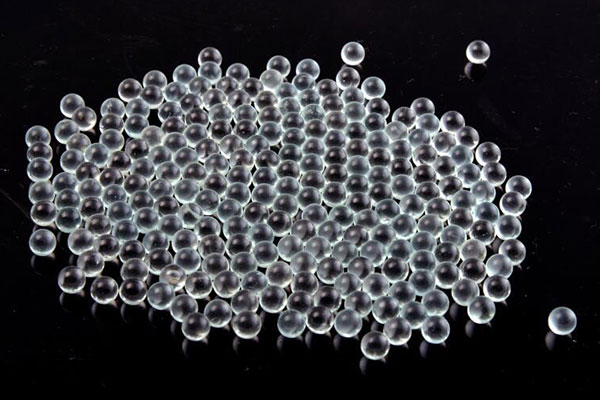
What Are AASHTO M247 Glass Beads?
AASHTO M247 glass beads are transparent, spherical glass particles used with pavement marking materials such as traffic paint, thermoplastic, and other road marking systems.
Their main job is to improve the retroreflectivity of road markings.
When a vehicle’s headlights shine on a road marking, the glass beads capture and redirect part of that light back toward the driver. This makes white and yellow road lines much easier to see in low-light conditions.
This is especially important on highways, expressways, intersections, pedestrian crossings, and other roads where nighttime visibility matters.
The FHWA describes AASHTO M247-compliant glass beads as an industry-standard and cost-effective way to provide retroreflectivity for pavement markings.
How Do Glass Beads Make Road Markings Reflective?
The principle is actually quite simple.
A glass bead acts like a tiny optical lens.
When light from a vehicle’s headlights enters the bead, the curved glass surface bends the light and helps send it back toward the light source. Since the light is directed back toward the driver, the road marking appears bright at night.
Without glass beads, a painted road line may still be visible during the day, but its nighttime visibility can be much lower.
That’s why glass beads are often called retroreflective glass beads or road marking glass beads.
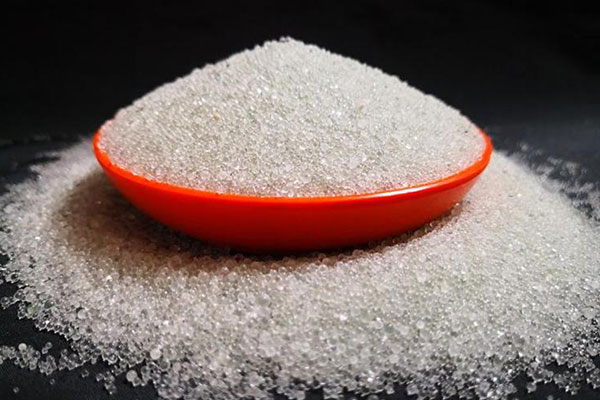
AASHTO M247 Glass Bead Types
One thing that can be confusing when buying AASHTO M247 glass beads is the different bead types.
The specification identifies:
- Type 0 – uniform gradation
- Type 1 – standard gradation
- Type 2 – modified gradation
- Type 3 – modified gradation
- Type 4 – modified gradation
- Type 5 – modified gradation
The different types mainly relate to the particle size distribution, or gradation, of the beads.
For example, smaller beads are commonly used in applications where a finer gradation is required, while larger beads can be useful for applications where greater bead exposure and durability are desired.
So, don’t simply ask a supplier for “AASHTO M247 glass beads.” It is better to specify the required type and gradation based on your road marking system and project specification.
Important Quality Requirements
AASHTO M247 is not simply about the size of the beads. Several properties are important for consistent performance.
1. Refractive Index
One of the most important properties is the refractive index.
AASHTO M247 specifies a refractive index of approximately 1.50 to 1.55 for the glass beads.
The refractive index affects how efficiently light enters and travels through the bead.
In practical terms, good optical properties are essential if you want strong nighttime retroreflectivity.
2. Roundness
The shape of the bead is also important.
Ideally, glass beads should be as spherical as possible. AASHTO M247 requirements include a minimum level of true spherical beads, and commercial specifications commonly identify 70% minimum true spheres.
Why does this matter?
Because a round bead works more like a tiny lens. Irregular or broken particles may not provide the same optical performance.
Better roundness can also help the beads flow more consistently through application equipment.
3. Clean and Transparent Glass
The beads should be clean, dry, and transparent.
Excessive bubbles, scratches, surface defects, contamination, or other imperfections can reduce optical performance.
A good road marking glass bead should look clear rather than cloudy or heavily contaminated.
4. Moisture Resistance
Moisture can cause problems during storage and application.
If beads absorb moisture or form lumps, they may not flow properly through the bead dispenser. This can result in uneven distribution on the road marking.
AASHTO M247 includes requirements related to coatings and moisture resistance, depending on the purchaser’s requirements.
For projects in humid or rainy climates, moisture-resistant treatment can therefore be an important consideration.
5. Bead Gradation
Gradation tells you how the bead sizes are distributed.
For example, the specification uses sieve sizes to control the percentage of material passing through different sieve openings. Different M247 types have different gradation requirements.
This is important because the bead size should match the application method and marking material.
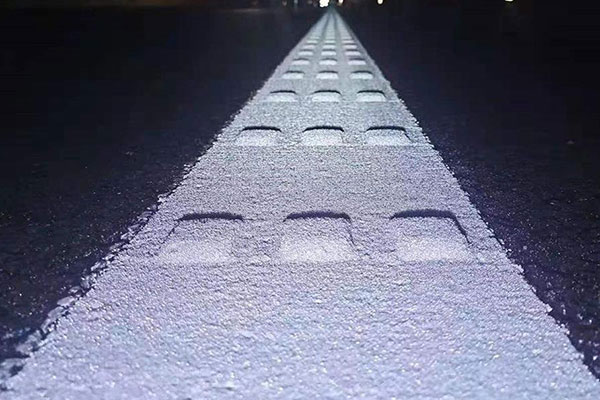
Where Are AASHTO M247 Glass Beads Used?
AASHTO M247 glass beads are widely used for different pavement marking applications.
Common applications include:
- Highway lane markings
- Edge lines
- Center lines
- Road symbols and arrows
- Pedestrian crossings
- Stop lines
- Traffic control markings
- Airport pavement markings, where specified
- Urban road markings
- Expressway and freeway markings
They can be used with different types of marking materials, depending on the project requirements.
Drop-On Glass Beads vs. Premix Glass Beads
You will also hear about drop-on glass beads and premix glass beads.
Drop-on beads are applied to the surface of freshly installed road marking material. The beads become partially embedded in the marking while remaining exposed enough to provide retroreflectivity.
Premix beads, on the other hand, are mixed into the marking material before application.
Many road marking systems use a combination of bead sizes and application methods to achieve the desired performance.
The correct approach depends on the type of marking material, application equipment, traffic conditions, and project specification.
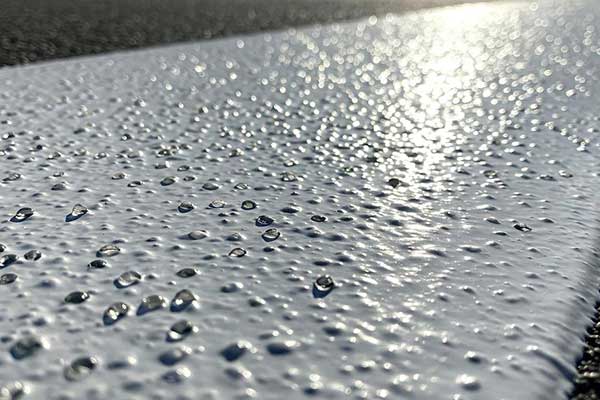
Why Bead Embedment Matters
Buying high-quality AASHTO M247 glass beads is only part of the job.
How the beads are applied is just as important.
If the beads are buried too deeply in the marking material, there may not be enough glass surface exposed to provide effective retroreflection.
If they sit too high on the surface, they may be more vulnerable to traffic wear and loss.
The goal is to achieve the right level of bead embedment and exposure.
This is one reason experienced road marking contractors pay close attention to application temperature, material thickness, bead drop rate, and application equipment.
How to Choose the Right AASHTO M247 Glass Beads
If you’re sourcing glass beads for a road marking project, I would suggest starting with these questions:
What type of road marking material are you using?
Traffic paint, thermoplastic, and other marking systems may require different bead sizes and application methods.
What bead type does the project specification require?
Don’t assume Type 1 is always the right choice. Check the project documents first.
What level of nighttime visibility is required?
Higher-performance road markings may require a carefully designed bead system rather than simply using more beads.
Will the beads be used in a humid environment?
If yes, moisture-resistant treatment may be worth considering.
Can the supplier provide test reports?
This is particularly important for government, highway, and international infrastructure projects.
Final Thoughts
AASHTO M247 remains one of the key specifications to know when sourcing glass beads for pavement markings. The current published version is AASHTO M 247-13(2022), covering glass beads used to produce reflectorized pavement markings.
If you’re buying AASHTO M247 glass beads for road marking, focus on three things: specification compliance, bead quality, and application performance.