

Glass Beads for Water-Based Road Marking Paints Explained
Water-based road marking paint needs more than good opacity and adhesion. To deliver visible lane lines at night, the fresh paint film must hold reflective glass beads at the right embedment depth.
Glass beads for water-based road marking paints are usually applied as drop-on beads immediately after the paint is sprayed or extruded. When vehicle headlights strike the marking, properly embedded beads return light toward the driver. This is what gives road lines their nighttime retroreflectivity.
The selection process matters. A bead that works well with thermoplastic paint may not deliver the same retention or visibility in a water-based paint system. Coating compatibility, gradation, roundness, moisture resistance, and application timing all affect the result.
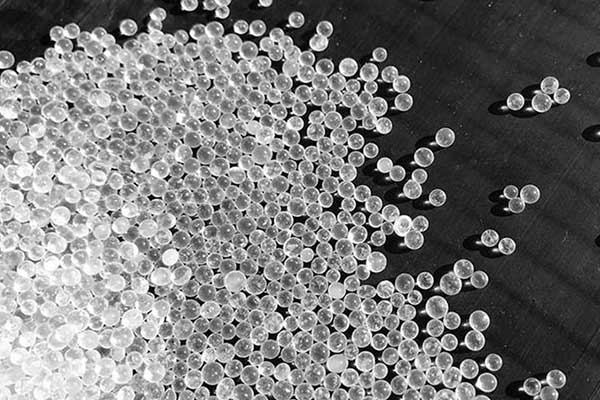
Why Water-Based Road Marking Paint Needs Compatible Glass Beads
Water-based traffic paint is widely used because it has low VOC content, is easy to handle, and can be applied with common road marking equipment. However, the paint film has different drying and curing behavior from thermoplastic, epoxy, MMA, or solvent-based systems.
The glass beads must:
- Flow freely through the bead dispenser
- Resist moisture during storage and application
- Sink into the wet paint at a controlled depth
- Bond securely to the cured paint film
- Maintain a clean exposed surface for retroreflection
- Resist traffic wear and weathering
For waterborne traffic paint, dual-coated glass beads are commonly specified. One example is the Iowa DOT requirement for dual coatings that include moisture-resistant silicone and adhesion-promoting silane for waterborne and VOC-compliant solvent-borne traffic paint. The exact coating chemistry and bead grade should always match the paint supplier’s recommendations and the project specification.
How Reflective Glass Beads Work in Road Markings
A glass bead acts as a small optical element. Headlight rays enter the bead, are refracted, reflect from the white or yellow marking beneath it, and travel back toward the driver.
This effect depends on correct embedment. If a bead sits too high, it may be pulled out quickly by traffic. If it sinks too deeply, too little of the bead remains exposed and nighttime reflectivity falls.
A well-applied bead layer should provide:
- Good initial nighttime visibility
- Even distribution across the full marking width
- Reliable adhesion after drying and curing
- Long-term retention under traffic
- Consistent reflectivity across the project
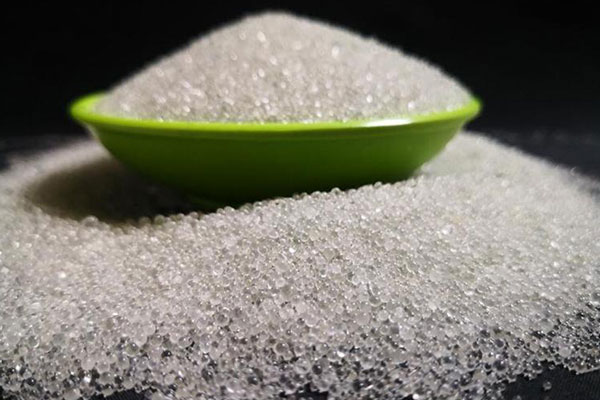
Glass Bead Specifications for Water-Based Road Marking Paint
1. Refractive Index
Standard road marking glass beads often have a refractive index of approximately 1.50 or higher. A higher refractive index can improve light return, but it is only one part of the system. Bead coating, roundness, size distribution, paint color, film thickness, and application quality also affect real-world performance.
For example, current U.S. state specifications commonly require a refractive index of at least 1.50 for standard traffic-marking beads. New York State DOT Section 727-05
2. Roundness
Round beads perform more predictably than irregular particles. High roundness supports more consistent optical performance and smoother application through bead dispensers.
Many specifications set a minimum percentage of true spheres. The applicable requirement varies by market and project.
3. Gradation and Bead Size
Gradation determines how the beads embed in the paint film and how much bead surface remains exposed.
A mixed gradation is often used because it can improve coverage and produce a more balanced bead layer. Large beads may provide stronger initial visibility when properly embedded, while smaller beads can fill gaps and improve distribution.
The correct gradation depends on:
- Wet film thickness
- Water-based paint formulation
- Spray or extrusion method
- Line width
- Application speed
- Required retroreflectivity
- Local authority specification
Use the bead gradation stated in the project specification or approved by the paint manufacturer. ASTM D1214 is commonly referenced for sieve analysis of glass spheres.
4. Coating Type
For water-based road marking paints, bead coatings are not optional details. They directly influence storage flow, embedment, adhesion, and retention.
Common functions include:
- Moisture-resistant coating: Helps beads remain free-flowing in humid storage and application conditions.
- Adhesion-promoting coating: Helps the bead bond to the paint film.
- Dual coating: Combines moisture resistance and improved adhesion. This is often appropriate for waterborne traffic paint systems.
Ask the supplier for a technical data sheet that states the coating type and recommended compatible paint systems.
5. Cleanliness and Moisture Resistance
Glass beads should be clear, clean, dry, and free from clumping. Beads contaminated by dust, excessive moisture, or broken particles can cause poor flow and uneven application.
A quality-control check should confirm:
- No hard lumps or moisture-related clumping
- Stable dispenser flow
- Clean, transparent appearance
- Low broken-bead content
- Consistent batch-to-batch gradation
- Packaging that protects against humidity
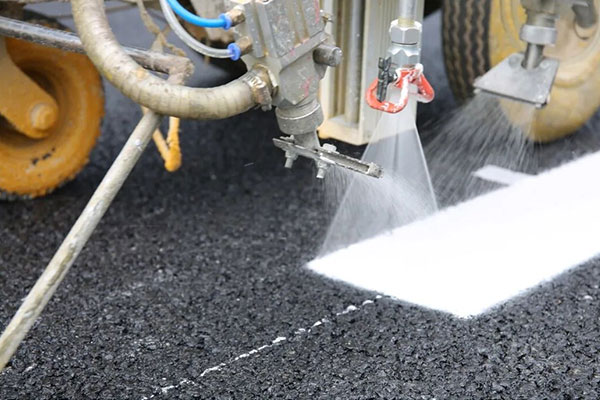
Drop-On Application for Water-Based Paint
For most water-based road marking jobs, glass beads are applied onto the wet paint immediately after the paint is placed.
The process should be coordinated so that beads contact the paint before skinning occurs. Application that is too early may cause excessive bead embedment. Application that is too late can reduce bond strength and increase bead loss.
Key application controls include:
- Paint film thickness: Follow the paint manufacturer’s specified wet-film thickness. A thin film may not hold the beads properly, while an overly thick film can bury them.
- Bead gun position: Set the bead dispenser so beads are distributed evenly across the full paint line. Avoid concentrated centerlines or thin edges.
- Bead application rate: Use the rate required by the contract, paint system, or equipment supplier. Do not assume one universal rate works for all paint types and line thicknesses.
- Vehicle speed: Excessive striping speed can affect film thickness, bead coverage, and bead embedment.
- Weather conditions: Surface temperature, humidity, pavement condition, and rain risk affect water-based paint drying. Do not apply beads to a surface that cannot support the required paint cure and bead bond.
Common Problems and Their Causes
Poor Nighttime Visibility
Possible causes include insufficient bead coverage, improper gradation, low roundness, excessive bead embedment, or beads applied after the paint surface has started to dry.
Check the paint thickness, bead application rate, bead-gun alignment, and the compatibility of the bead coating with the water-based paint.
Glass Beads Falling Off
Poor retention often points to weak paint-bead bonding, incorrect application timing, unsuitable coating, contaminated pavement, or application in poor weather conditions.
For water-based paint, confirm that the specified adhesion-promoting or dual-coated beads are being used.
Uneven Bead Distribution
Uneven reflectivity across a line can result from blocked dispensers, inconsistent air pressure, damp beads, poor calibration, or incorrect bead-gun height.
Inspect bead flow before every shift and perform a short test line before full production.
Beads Sinking Too Deeply
If beads are buried in the paint, retroreflectivity will be reduced. Review wet-film thickness, bead size distribution, application timing, and paint viscosity.
To Conclude
Choose glass beads for water-based road marking paints based on the complete marking system, not on bead size alone.
Confirm that the beads:
- Match the water-based paint formulation
- Use a suitable moisture-resistant and adhesion-promoting coating
- Meet the required gradation and roundness standard
- Have the required refractive index
- Flow freely through the application equipment
- Are applied at the specified rate and timing
- Deliver acceptable field retroreflectivity after curing
The right glass beads help water-based road markings remain visible, durable, and safer for drivers at night.
Need glass beads for water-based road marking paint? Contact Roadsky with your paint type, application method, local standard, required gradation, and target market. Our team can recommend a suitable glass bead specification and provide samples for evaluation.